Cavity Wall Inspection Camera: See What's Behind the Damp Patch
Quick answer: a cavity wall inspection camera lets you drill one small hole in a mortar joint, look inside the wall cavity, and see for yourself whether the damp patch on your wall is slumped insulation, a leak or simple condensation — before you sign a £2,000 damp-proofing quote that may be treating the wrong problem.
The damp quote problem
The pattern is familiar to thousands of UK homeowners in 1930s semis and interwar terraces: a damp patch or mould spot appears on an outside wall in winter, a damp-proofing company offers a "free survey", and the survey concludes — reliably — that you need their most comprehensive treatment. Injection damp-proofing quotes of £2,000 or more are common, and the industry's habit of diagnosing with a conductance meter pressed against plaster is widely criticised, because those meters cannot tell rain penetration from condensation from a plumbing leak.
An independent damp surveyor is the gold-standard answer, but at £200 or more per visit many people want a first look themselves. That is exactly what a cavity wall inspection camera gives you: direct sight of the cavity behind the damp patch, for less than a tenth of the typical quote.
What you can actually see inside a cavity wall
- Slumped or missing cavity wall insulation — blown-fibre or bead CWI that has settled, leaving cold bands near the top of walls, or wet clumps at the bottom.
- Wet insulation — saturated fibre wicks rain across to the inner leaf; it looks dark, matted and compressed.
- Cavity bridging — mortar droppings on wall ties, or builder's debris at the cavity base, carrying moisture across the gap.
- Water tracks — staining and drip lines down the inside face of the outer leaf, usually below a failed pointing area, cracked render or a leaking gutter above.
Each of those has a different fix — and none of them is cured by injecting a chemical damp-proof course into the inner leaf.
How to look inside: one 12mm hole
- Pick the spot. Outside face of the wall, in line with the damp patch. Choose a mortar joint (cross-point of vertical and horizontal joints) — mortar repairs invisibly, brick does not.
- Check for services. Run a cable and pipe detector over the area first, and stay well clear of sockets, switches and boiler penetrations.
- Drill the joint. A 12mm masonry bit through the outer leaf only — you will feel the bit break into the void. Typical cavities are 50–75mm wide.
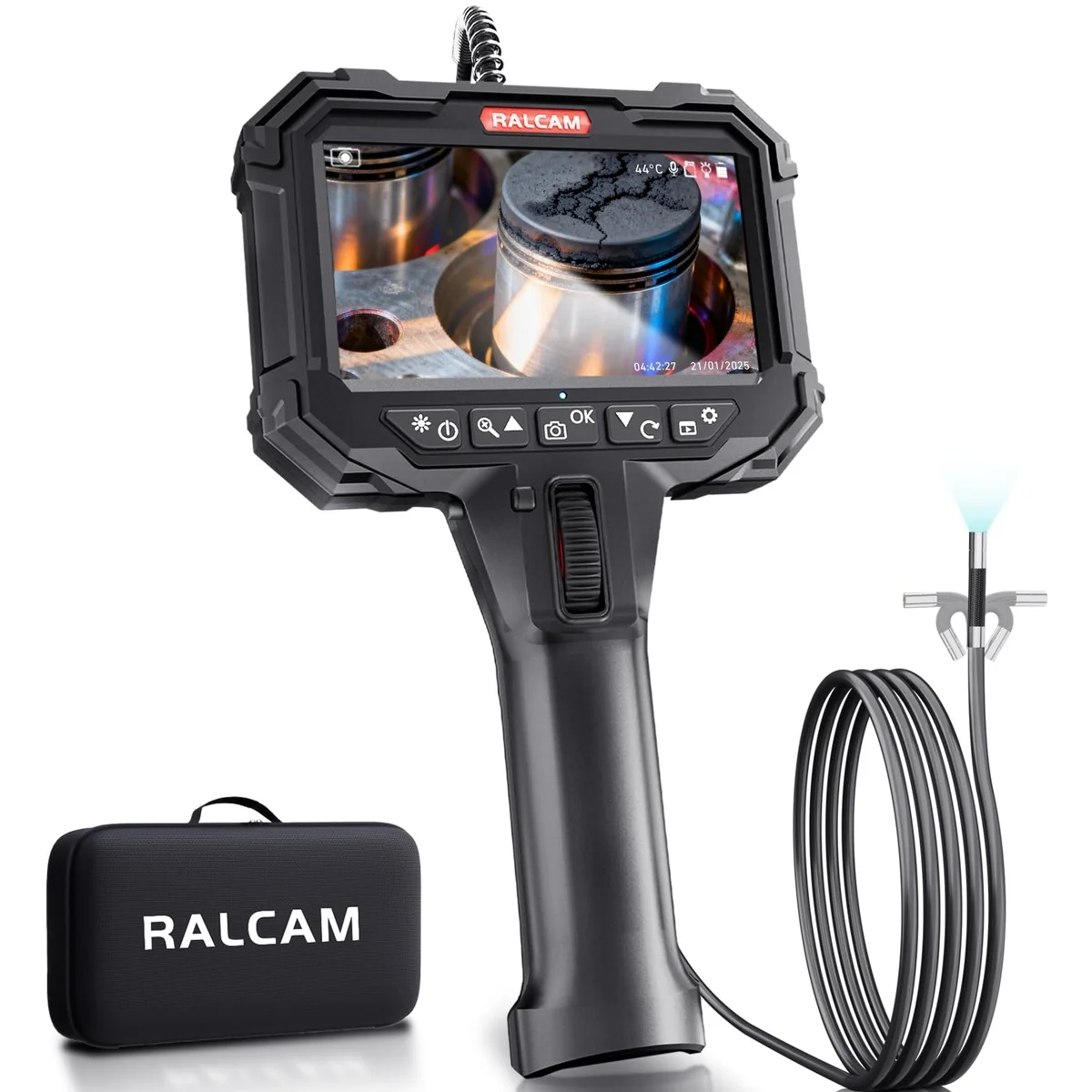
- Scope the cavity. Feed the probe in and steer. This is where two-way articulation earns its money: you can look up, down and along the cavity from a single hole instead of drilling three. The ARTICAM's 5.5mm probe passes a 12mm hole with room to steer, and the picture lands on your phone screen, easy to see in daylight.
- Record everything. Save photos and video with a note of location and date. Then patch the hole with matching mortar.
Reading what you find
Dry, evenly hung insulation and a clean cavity point away from the cavity and towards condensation — look at ventilation, heating pattern and cold bridging instead. Wet matted insulation below the patch, or mortar bridging at the right height, gives you a physical cause you can photograph. Water tracks on the outer leaf send you outside — and very often upwards: a blocked or leaking gutter soaking the wall is one of the most common real causes of "rising damp" diagnoses. Our gutter inspection camera guide covers checking that from ground level, and the same drill-and-look technique works for other cavity jobs — including the less glamorous ones like finding a dead mouse in a wall.
Honest limits — when to bring in a professional
A camera shows you conditions; it does not make you a surveyor. If you see saturated CWI across a large area, suspect wall-tie corrosion, or the property is a system-built or timber-framed house, commission an independent surveyor (one who sells reports, not treatments) and hand them your photos — you will get a better survey for it. Extraction of failed CWI is a specialist job with its own funding routes if the insulation was mis-sold. And if you are not confident drilling your own wall, don't: the point of a £168.00 camera is avoiding a £2,000 mistake, not creating one.
Frequently Asked Questions
What size hole do I need to inspect a cavity wall?
A 12mm hole in a mortar joint is enough for a 5.5mm articulating probe with room to steer. Drill through the outer leaf only, at a joint cross-point, and patch with matching mortar afterwards. The repair is effectively invisible.
Can a camera tell me whether my cavity wall insulation has failed?
It shows you the physical state: slumping, gaps, wet matted fibre or beads washed to the cavity base are all visible on screen. Whether the insulation should be extracted is a judgement for an independent surveyor — but your photos make that conversation far cheaper and harder to spin.
Is it safe to drill into a cavity wall myself?
With basic care, yes: use a cable and pipe detector first, keep clear of sockets, switches, meters and flue exits, drill a mortar joint on the outer leaf, and stop as soon as the bit breaks through into the void. If any of that feels beyond you, have a builder drill the hole and do the looking yourself.
Will an inspection camera work in a damp cavity?
A damp cavity is fine; standing water is not. The ARTICAM is designed for dry environments — inspecting a moist cavity or peering at wet insulation is normal use, but do not dunk the probe in pooled water at the cavity base. If the cavity is actually flooded, you have found your answer already.
Should I get a damp survey before paying for damp-proofing?
Yes — and pay for it. An independent surveyor with no treatment contract to sell is consistently the best £200 spent in this situation. Use your cavity photos to brief them, and treat any "free survey" from a company that sells injection treatment as a sales visit.
Key Takeaways
- One 12mm hole in a mortar joint gives a steerable camera full sight of the cavity behind a damp patch.
- Slumped or wet CWI, mortar bridging and gutter leaks are all visible — and none is fixed by injection damp-proofing.
- Photograph and date everything; evidence changes the conversation with damp companies and surveyors.
- Large-area saturation, wall-tie worries or system-built homes: hand your photos to an independent surveyor.
Look before you sign the damp quote — the ARTICAM 5.5mm articulating borescope — £168.00, free UK delivery, 30-day returns, 12-month warranty.
Ready to try ARTICAM?
Shop Now — £168.00