How to Find a Dead Mouse in a Wall Without Ripping It Open
Quick answer: to find a dead mouse in a wall, map the smell to its strongest point at skirting level, drill one 10–12mm hole just above the skirting board, and confirm the exact spot with a slim steerable inspection camera before you cut any plasterboard. One small confirmed opening beats three exploratory holes — and gets the smell out of the house days sooner.
Work out which wall — and how high
Dead-rodent smell is heavier than air near its source and travels along cavities, so trust your nose methodically rather than instinctively. Kneel and smell along the skirting line of every wall in the affected room, then do the same at socket height. The smell is strongest within half a metre of the carcass in most stud and cavity walls. Warmth intensifies it: if the smell peaks near a radiator pipe run or an airing cupboard, start there. Flies and their pupae congregating at one section of wall are as good as a signpost.
Typical resting places, in order of likelihood: the wall void behind a kitchen unit run (bait is often nearby), under floorboards along joist runs, behind bath panels, and the cavity beside a chimney breast where warm flue air rises.
Drill one small hole and look
- Choose the spot at the strongest-smell point, 50–100mm above the skirting board.
- Detector first. Cables drop vertically above and below sockets and run horizontally from them — run a cable detector over the area and stay clear of those safe-zone lines.
- Drill 10–12mm through the plasterboard (or the mortar joint, on a masonry wall). You only need clearance for a 5.5mm probe plus steering room.
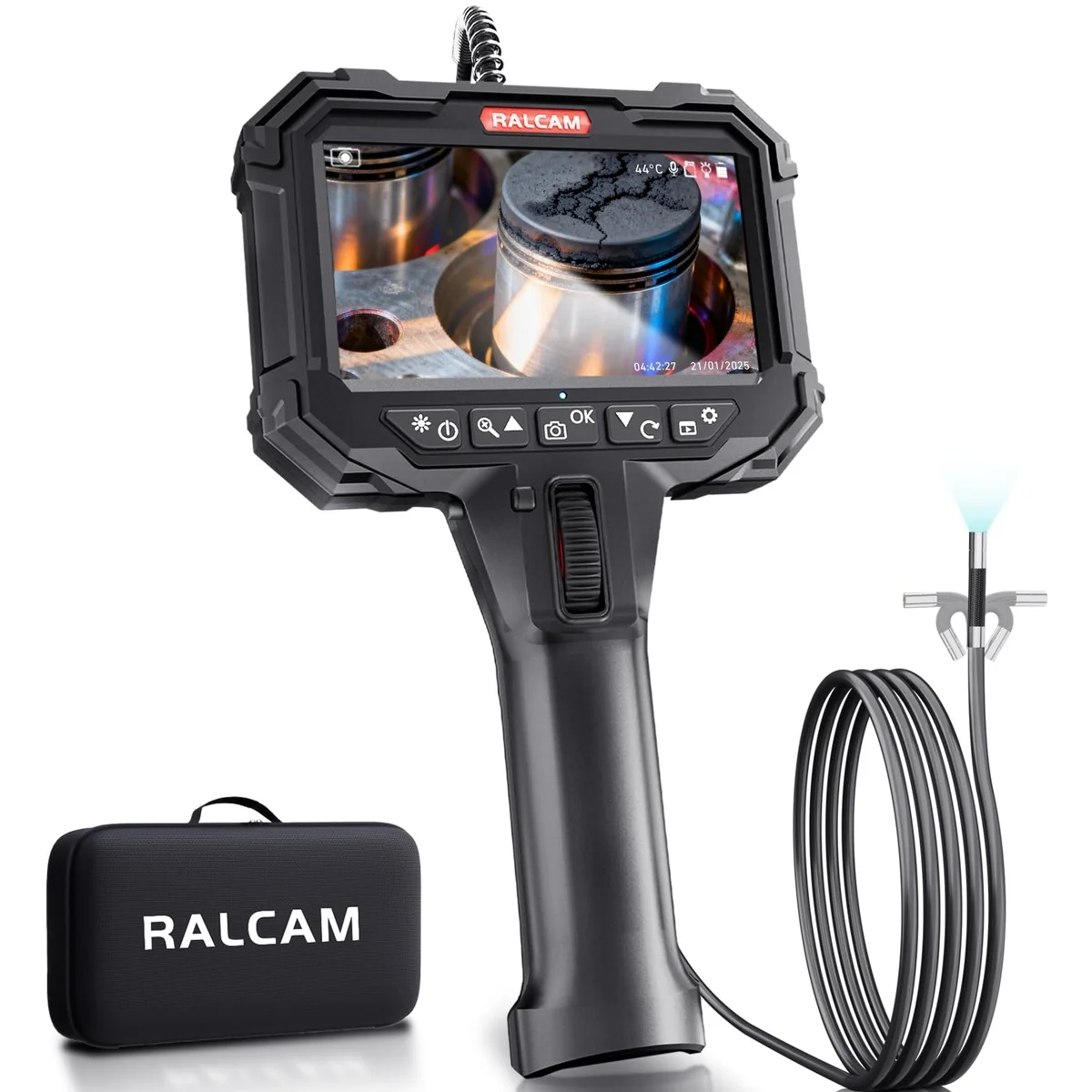
- Scope the void. Feed the probe in and sweep left and right along the cavity. Two-way steering is the whole game here: a fixed-tip camera stares at the back of the plasterboard, while an articulating tip like the ARTICAM 5.5mm turns and looks down the void in both directions from a single hole. The picture lands on your phone, and the LED tip lights the cavity properly.
- Mark and confirm. Found it? Mark the wall at the spot, photograph the screen view, and only now cut an access hatch — a neat 100mm square you can patch, rather than a speculative trench.
Removal and getting rid of the smell
Wear disposable gloves, lift the carcass into a doubled bag, seal it and bin it with household waste. Then treat the spot: an enzyme-based cleaner on the surfaces the carcass touched breaks down the residue that ordinary disinfectant leaves behind — this is the difference between the smell going now and it fading over weeks. Leave the access open to ventilate for a few hours before patching. If maggots or flies are established, vacuum them out first (bin the bag immediately) before cleaning.
If you need it gone today
This is the job nobody plans for: guests on Saturday, the smell peaking, and a pest controller quoting a call-out fee plus an hourly rate for locate-and-open work, some days out. The DIY route stands or falls on speed — which is why next-day dispatch matters more here than any spec: the ARTICAM ships from a UK warehouse with free next-day-capable delivery (order cut-off applies), so the locate-drill-confirm job can happen tomorrow rather than after the weekend. The same camera then earns its keep on less urgent wall-void work — see our cavity wall inspection camera guide.
When to stop and call a professional
Be honest about the losing scenarios. If the smell sits under a solid or tiled floor you cannot lift, behind a fitted kitchen you cannot pull out, or the "mouse" is evidently a rat (stronger, longer-lasting smell, larger droppings nearby), a pest controller with borescopes, thermal kit and the authority to open up is the right call — and if rats are involved, the entry route needs finding and sealing anyway. Likewise if the smell keeps returning: one carcass is an event, repeat carcasses are an infestation, and killing the smell without stopping the access solves nothing. Seal likely entry points (gaps around pipe penetrations, airbricks, door thresholds) with steel wool and sealant once the immediate job is done.
Frequently Asked Questions
How long does a dead mouse in a wall smell if I do nothing?
Typically two to eight weeks for a mouse, depending on warmth and airflow, as the carcass dries out. A rat smells stronger for longer. Waiting it out is genuinely an option for a faint smell in a spare room — but rarely bearable in a kitchen or living room, which is exactly where they tend to die.
Where do mice usually die inside walls?
Close to warmth and food routes: wall voids behind kitchen units, under floorboards along joist runs, behind bath panels and beside chimney breasts. If poison bait was put down, the carcass is often within a few metres of the bait point.
What size hole do I need for an inspection camera?
10–12mm is enough for a 5.5mm articulating probe with room to steer left and right along the void. Drill just above the skirting board after checking for cables, and the patch afterwards is a five-minute filler job.
Is it safe to leave a dead mouse in the wall?
Health risk is low once the carcass dries, but flies, carpet beetles and staining are real possibilities, and the smell can migrate along the cavity to other rooms. If you can locate it with a camera through a small hole, removal is almost always the better call.
Do enzyme cleaners actually work on dead-rodent smell?
Yes — on the residue where the carcass lay. They digest the organic material that keeps regenerating the odour, which bleach and general disinfectants do not. Remove the carcass, treat the contact area, ventilate, then patch.
Key Takeaways
- Map the smell at skirting level; strongest point is usually within half a metre of the carcass.
- One 10–12mm hole plus a steerable camera confirms the spot before any plasterboard is cut.
- Enzyme cleaner on the contact area is what actually kills the smell.
- Solid floors, fitted kitchens, rats or repeat smells: hand it to a pest controller.
Locate it tonight, fix it tomorrow — the ARTICAM 5.5mm articulating borescope — £168.00, free UK delivery, 30-day returns, 12-month warranty.
Ready to try ARTICAM?
Shop Now — £168.00