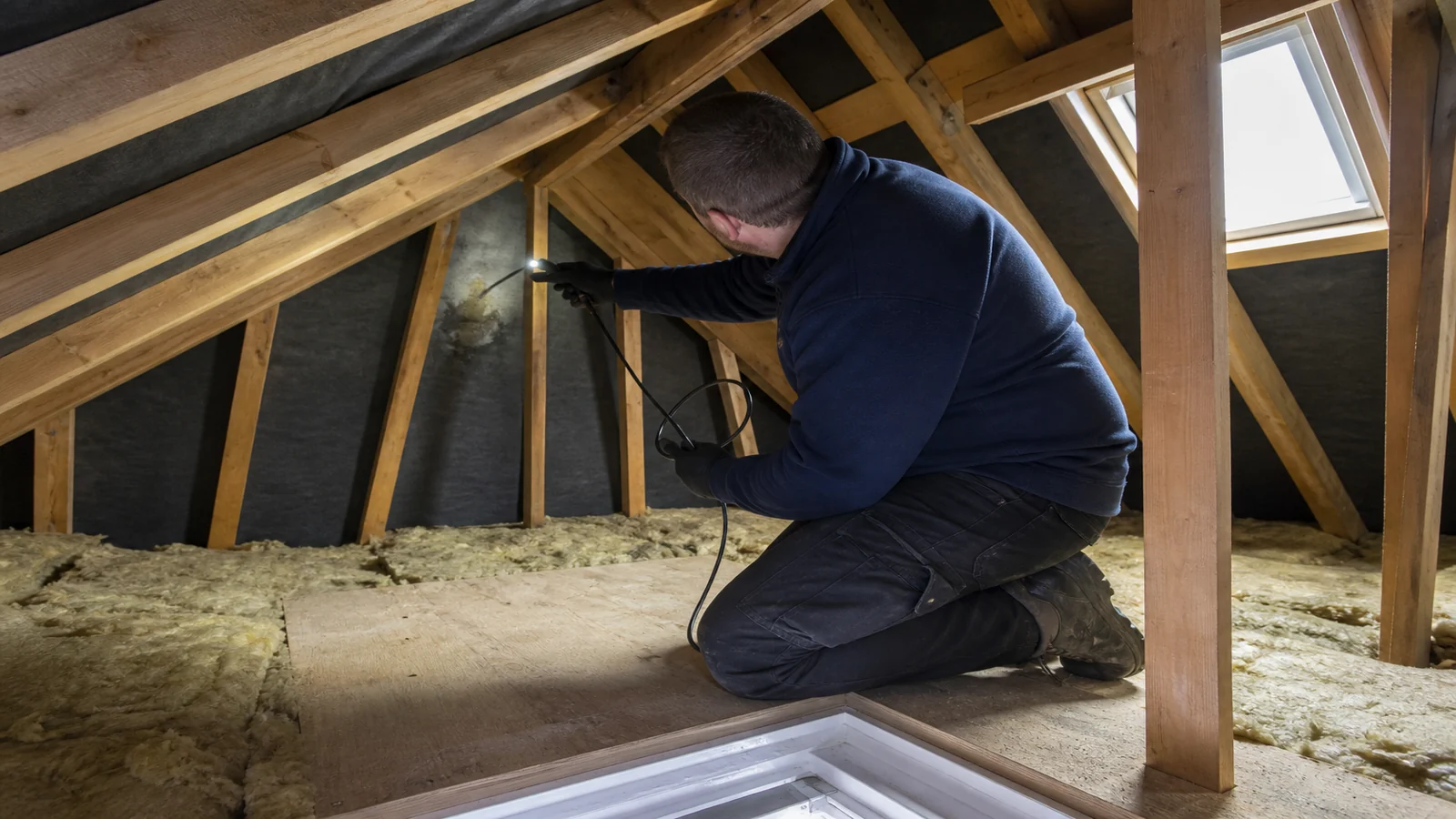
Roof Void Inspection Camera for Leaks: Trace the Route Before Opening Up
A roof void inspection camera for leaks is useful when a ceiling stain or intermittent drip sits beyond a safe boarded path, but it will not name the exact entry point from one glance. Water often travels along felt, rafters or ceiling joists before it shows indoors. Stay on boards, keep the camera dry, and treat the image as a way to plan the next opening rather than as a complete diagnosis.
Can a camera find where a roof leak starts?
Sometimes it can show the indoor route. It rarely proves the outdoor defect on its own. Historic England's roof repair advice is to investigate defects through careful maintenance rather than assuming the visible stain is the whole story. Read that Historic England roof maintenance guidance before you strip felt or lift several slates.
A slim articulating head can follow a dark track on the underside of sarking, look into an eaves void from a hatch, or show whether a chimney stack's inner face is wet while the adjacent bay is dry. That narrows the search. It does not replace a competent look at flashings, valleys, abutments and rainwater goods from a safe position.
Where should I inspect from inside the loft?
Start from the hatch, not from the stain. If the stain is isolated beside a chimney, then look first at the stack, soakers and the nearest rafter bay; the next step is to compare that bay with a dry neighbour. If the stain sits in the middle of a ceiling, then follow joists toward the eaves and any pipe or cable penetration; the next step is to check the corresponding gutter and valley outside from the ground. If drips appear only in wind-driven rain, then inspect the underside of slates or tiles near edges and abutments rather than the centre of the roof.
Keep one boarded route. Move insulation aside only enough to see, and put it back. Do not step between joists onto plasterboard. Do not walk on the roof covering to chase a camera view. HSE treats many roof surfaces as fragile until a competent person says otherwise, including fibre-cement sheets, rooflights, corroded metal, glass and rotten boards. Follow the HSE fragile roofs guidance and stay off those surfaces.
How can I distinguish a roof leak from condensation?
A roof leak usually leaves a local track: a rusty nail stain, a tide mark that grows after rainfall, wet felt in one bay, or droplets that appear on a rafter while neighbouring timber stays dry. Condensation is more even: widespread beads on cold felt, damp insulation over a whole slope, and staining that appears after cold nights even when the roof covering looks intact from the ground.
A camera helps when you can compare two bays in the same visit. Wet in one line after rain, dry next door, points to a covering or flashing fault. Wet across a large area with little outdoor clue points to ventilation, insulation gaps or a warm, moist loft. Do not specify a new covering from the stain colour alone.
What are the limits of a small articulating camera?
Reach, darkness and moisture all limit the tool. A short probe will not span a long eaves run. Dust on the lens turns every image into fog. Standing water on a ceiling, in a valley tray, or on a flat roof deck is a stop for a dry-use camera. An articulating head can look around a rafter, but it cannot measure moisture content, cannot confirm whether a timber is structurally sound, and cannot see through insulation.
Scale is easy to misread. A dark patch may be old bitumen, not a current leak. A shiny surface may be a new drip or simply a nail plate. Record stills with a note of the bay, the weather that day, and whether the stain is growing. Then decide whether the next opening should be a single slate from outside, a small ceiling hatch, or a roofer's survey.
When is the roof void unsafe to enter?
The roof void is unsafe to enter when you would have to walk on insulation or plasterboard, when boards are missing or rotten, when electrical cables are damaged, when the hatch is too small for a controlled exit, or when the roof covering itself is the access route. Treat the covering as fragile until you know it is not. Short maintenance jobs still need proper controls; they are over-represented in fall injuries.
Stay out during a live leak that has pooled on the ceiling, after a fire, or if you can see daylight through a large hole. Those conditions need a roofer, and possibly an electrician if fittings are wet.
Who this inspection method is not for
This article is not for anyone who would have to walk on insulation or an unboarded ceiling to reach the stain. This article is not for working from the roof covering itself. It is also the wrong method for listed-building covering replacement, for a flat roof with standing water, and for any job that already needs scaffolding or a licensed contractor.
When the job should stop
Stop if you cannot stay on sound boards. Stop if the camera would enter standing water. Stop if the stain keeps spreading while you cannot see a corresponding wet line above. If the stain is remote from any safe viewpoint, the next step is a roofer, not a longer probe. If you find wildlife signs in the loft before roof work, pause and read how to check a loft for bats before roof work rather than opening the covering.
Where a dry look from a boarded hatch is still reasonable, a slim inspection camera can record the bay you cannot crawl to. See the ARTICAM articulating inspection camera for that dry void check, then hand the stills to whoever will repair the covering.