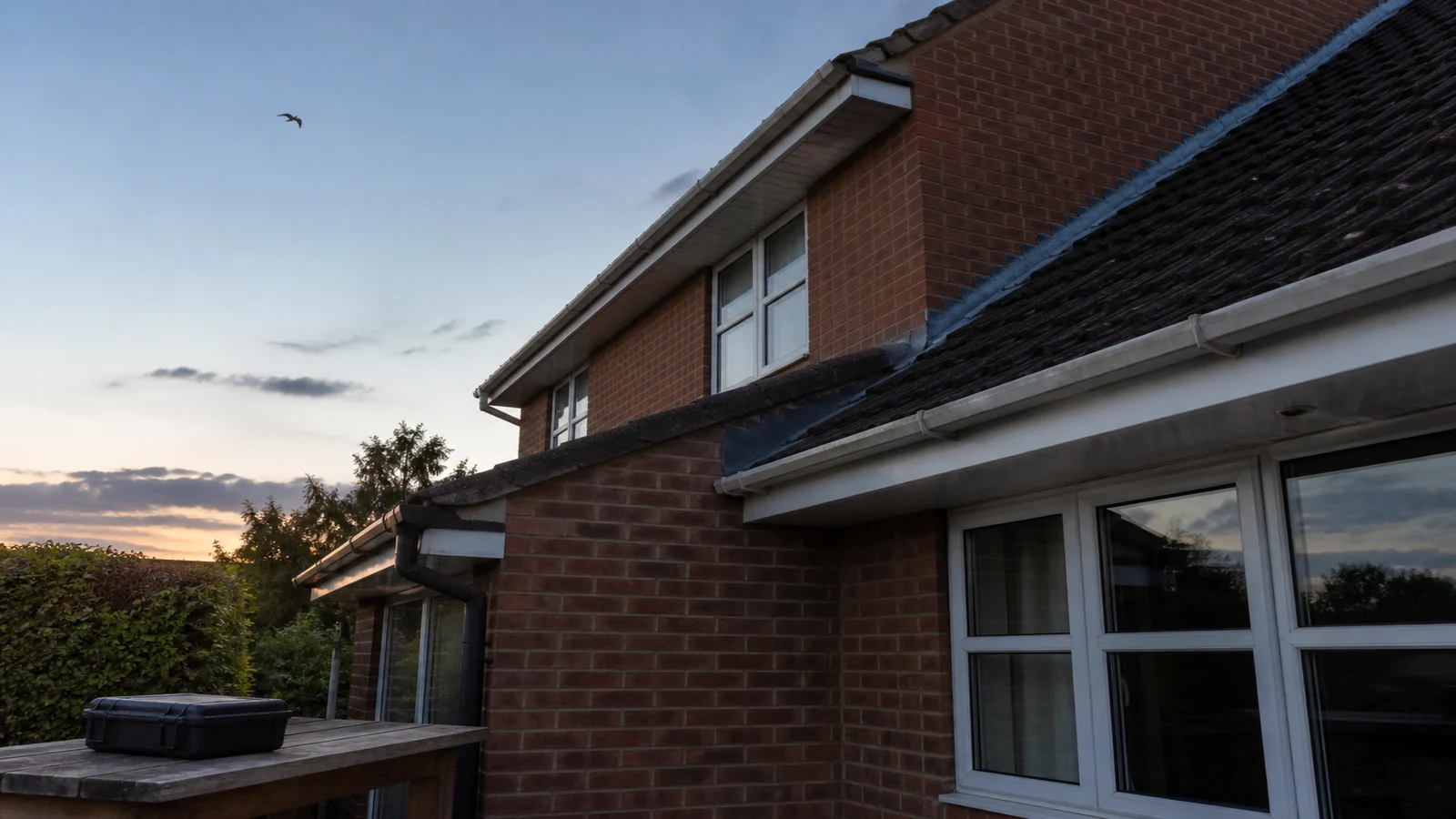
Check Loft for Bats Before Roof Work: UK Limits and Next Steps
You should not treat an inspection camera as a way to clear a loft for roof work. In England, bats and their roosts are legally protected, and a casual look, including a camera look, cannot prove that a roost is absent. If you notice droppings, staining or possible access gaps, pause the work and get ecological advice before you strip felt, block holes, or insulate.
Can I use an inspection camera to check a loft for bats?
A camera can record a gap, a stain, or a pile of droppings so you can describe the loft to an adviser. It is not a bat survey, and it is not a licence. GOV.UK states that all bat species, their breeding sites and resting places are fully protected. The same guidance lists repairing or replacing a roof, and insulating or converting a loft, among activities that can harm bats. Read GOV.UK bats protection, surveys and licences before you plan the work.
Absence on one camera view is not evidence that no roost exists. Bats may be out feeding, tucked in a crevice the probe cannot reach, or using the building only in some seasons. Do not push a probe into a suspected roost, and do not keep searching until you find an animal.
What signs might suggest bats are using the roof?
Use this checklist only as a pause trigger, not as a survey.
- Droppings that crumble rather than smear like wet rodent droppings.
- Staining or slightly polished edges at a soffit, barge or ridge gap.
- Scratch marks or a regular dusk exit from the same gap.
- An empty-looking loft that still has eaves crevices you cannot see from the hatch.
Possible signs include droppings that crumble to a dusty insect fragment mix, staining around a soffit or barge gap, scratch marks at an access, faint chattering at dusk, or seeing bats leave the eaves. Buildings can contain bat roosts that are not obvious during a casual inspection, which is why the Bat Conservation Trust bat roosts and buildings guidance matters even when the loft looks empty from the hatch.
Do not identify species from a phone photo and then decide the law does not apply. Protection covers the roost as well as the animal. A gap at the eaves with no visible bat is still a reason to pause if roof work would close that gap.
A camera still of an empty ridge is useful only as a description for the helpline or an ecologist: where you stood, what weather it was, and which elevation the gap sits on. It is not a clearance certificate. If contractors are already booked, the practical next step is to postpone stripping until advice arrives, not to search harder with a longer probe.
What should I avoid disturbing?
Do not block access points, handle bats or disturb a suspected roost. GOV.UK sets out that you would be breaking the law if you deliberately capture, injure or kill bats, damage or destroy a breeding or resting place, obstruct access to resting or sheltering places, or disturb a bat in a place of shelter. Those limits apply whether the disturbance was done with a hand, a ladder, insulation, or a camera probe.
Also avoid lighting a roost entrance, treating timber in a suspected roost, and packing insulation into eaves gaps as a weekend improvement. If you find a bat during work, stop, keep people and pets away, and seek advice rather than moving the animal.
Does finding no bat on camera mean work can continue?
No. Finding no bat on camera does not mean work can continue. Legal and ecological advice takes priority over DIY inspection. A survey by a suitably qualified person is what shows how bats use the building, and GOV.UK notes that in many cases you should have an expert do a bat survey so you can plan to avoid harm.
The National Bat Helpline, described on that GOV.UK page, can advise householders about small-scale works in a home or place of worship. It cannot provide advice for building works that need planning permission. If your roof project needs planning permission, budget for a consultant survey on the programme, not a Saturday camera session.
When do I need a bat survey or licence advice?
You need survey or licence advice when you cannot avoid affecting bats or their habitats, when the work is a roof repair or replacement, loft insulation or conversion, or when you already have signs of use. GOV.UK explains that a licence from Natural England may be needed if you cannot avoid disturbing bats or damaging their habitats, and that penalties can include an unlimited fine and up to six months in prison.
That GOV.UK page applies to England. If the property is in another UK nation, use that nation's published bat protection rules rather than assuming the England process. Do not start stripping the covering while you wait.
Who this inspection method is not for
This article is not for anyone trying to prove that a loft has no bats so that roof work can start this weekend. This article is not for handling, relocating or photographing bats at close range. It is also the wrong method for development that needs planning permission, for blocking eaves as a pest-control shortcut, and for treating a camera still as a survey report.
When the job should stop
Stop if you see droppings, staining at an access, or a bat. Stop if the planned work would close gaps at the eaves, soffit or ridge. Stop if you were about to use a camera as a substitute for a survey. Legal and ecological advice takes priority over DIY inspection.
A camera kit on the ground is not the decision tool here. If, after advice, you still need a dry look at an inaccessible roof void for a leak rather than a wildlife search, that is a different job: see using a camera in a roof void for leaks and the ARTICAM articulating inspection camera only for that dry building inspection, never as a roost survey.