Caravan Damp Inspection Camera: Look Inside the Walls Before the Rot Spreads
Quick answer: when a damp meter gives you a borderline reading, a caravan damp inspection camera lets you look inside the wall void through existing openings — locker backs, bed boxes, service hatches — and see whether there is actual staining, wet timber or delamination behind the panel, before you commit to a £100+ professional damp report or a four-figure repair.
The borderline-reading trap
Every caravan and motorhome owner knows the ritual: spring collection from storage, a sniff of mustiness, and the damp meter reading that sits exactly in the amber band owners’ clubs argue about. Below the mid-teens per cent you relax; over twenty you know; in between you are stuck — book a professional damp report and feel foolish if it is nothing, or ignore it and let the plywood rot another season. Surface meters make it worse: they read the panel face, not the void behind it, and condensation on a cold wall can push a healthy panel into amber. The way out of the trap is sight: look inside the void where the water actually travels.
Getting eyes inside without drilling your van
Do not drill a caravan wall — unlike a house cavity, every panel is structural sandwich and every new hole is a future leak. Use the openings the van already has:
- Locker and cupboard backs: access panels and cable grommets open into the wall void on most layouts.
- Bed boxes and seat bases: the cold, unventilated corners where damp shows first; probe along the floor-wall junction.
- Service hatches: behind the fridge vent, boiler compartment and battery locker you can reach voids adjacent to the usual leak routes.
- Fixture penetrations: awning rail screw lines, window surrounds and roof-light upstands — where sealant fails first — can often be sighted from the nearest interior opening.
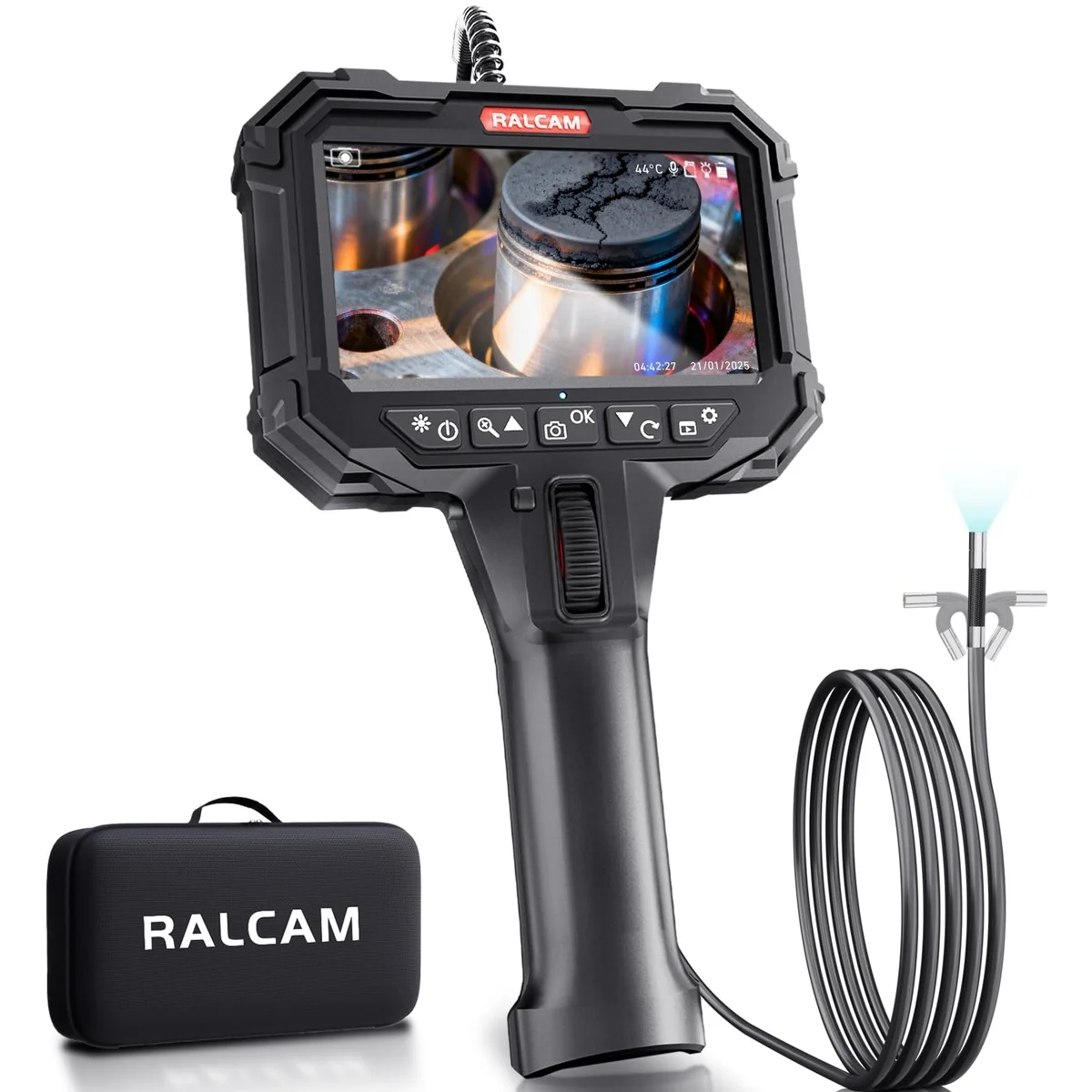
A steerable tip is what makes existing openings enough: the ARTICAM 5.5mm articulating borescope turns inside the void and looks along the panel in both directions from one grommet, streaming to your phone so you can work one-handed in a bed box. The probe is slim enough for cable penetrations, and the picture is lit by the tip’s own LEDs — voids are pitch black even at midday.
What damp actually looks like in a wall void
- Tide marks and tracking stains running down from a window corner or rail line — the classic sealant failure signature.
- Dark, swollen ply or crumbling batten at the floor junction — long-standing ingress, not condensation.
- Delamination: the inner face bubbling away from the core; on camera it reads as a wavy panel surface with shadow lines.
- Clean, dusty void with dry timber: the picture you are hoping for — your borderline meter reading was surface condensation, and you just saved a report fee.
Evidence: the part owners underrate
Photograph everything, dated, with a note of location — the habit pays three ways. Under warranty, a dated photo sequence showing staining at a rail line is exactly the evidence a dealer’s warranty process responds to, and catching it inside the water-ingress warranty window is worth thousands. At resale, a folder of clean annual void photos answers the buyer’s damp-meter suspicion better than any assurance. And season to season, comparing this spring’s photo with last spring’s tells you whether that faint mark is stable history or live ingress — the question a single meter reading can never answer. The same borescope-through-existing-openings technique works on household wall voids too (see the cavity wall inspection camera guide), so the tool does not hibernate with the van.
Honest limits — when to book the professional report
A camera confirms and locates; it does not certify. If you find active staining, swollen timber or delamination, the next call is a professional damp report and a repair quote — your photos make both faster and harder to pad. If you find nothing but the musty smell persists, floors and roof voids (which existing openings often cannot reach) remain suspects, and a professional with moisture mapping earns the fee. Two practical cautions: the ARTICAM is a dry-environment unit — probing a damp void is normal use, but do not push it into standing water in a flooded bilge or locker base — and resist widening any existing hole to fit the probe; if it does not reach, that is what the professional’s kit is for.
Frequently Asked Questions
What damp meter reading is bad in a caravan?
Owner-club rules of thumb treat readings below roughly the mid-teens per cent as normal, above twenty as action territory, and the band between as "investigate". Surface meters read the panel face, though — a camera look inside the void is how you turn a borderline number into a yes or a no.
Can I check for caravan damp without drilling holes?
Yes — and you should not drill. Locker backs, bed boxes, service hatches and cable grommets open into the wall voids on most vans; a slim steerable probe through those existing openings covers the junctions and rail lines where ingress starts. New holes in a sandwich panel are future leaks.
Will the camera work in a wet wall void?
Inspecting a damp void is normal use; submerging the probe is not — the ARTICAM is designed for dry environments. If there is standing water where you are probing, you already have your answer: photograph it and book the repair conversation.
Is a borescope better than a damp meter for caravans?
They answer different questions. The meter flags "moisture somewhere near this spot"; the camera shows what is actually happening behind the panel. The effective routine is meter first for coverage, camera second for truth at every borderline or suspicious reading.
Will photos help with a water-ingress warranty claim?
Dated photo sequences showing staining at a specific line — awning rail, window corner — are precisely the evidence dealers’ warranty processes ask for, and they establish the fault arose inside the warranty window. Store them per location, per service, alongside your damp-check records.
Key Takeaways
- Borderline meter readings are the trap; sight inside the void is the exit.
- Never drill a caravan wall — locker backs, bed boxes and grommets already reach the voids.
- Tide marks, swollen ply and delamination on camera turn "maybe" into a decision.
- Dated photos win warranty claims and resale conversations; the archive is the asset.
Turn a borderline reading into an answer — the ARTICAM 5.5mm articulating borescope — £168.00, free UK delivery, 30-day returns, 12-month warranty.
Ready to try ARTICAM?
Shop Now — £168.00