Engine Inspection Camera: Check Cylinder Bores Without Removing the Head
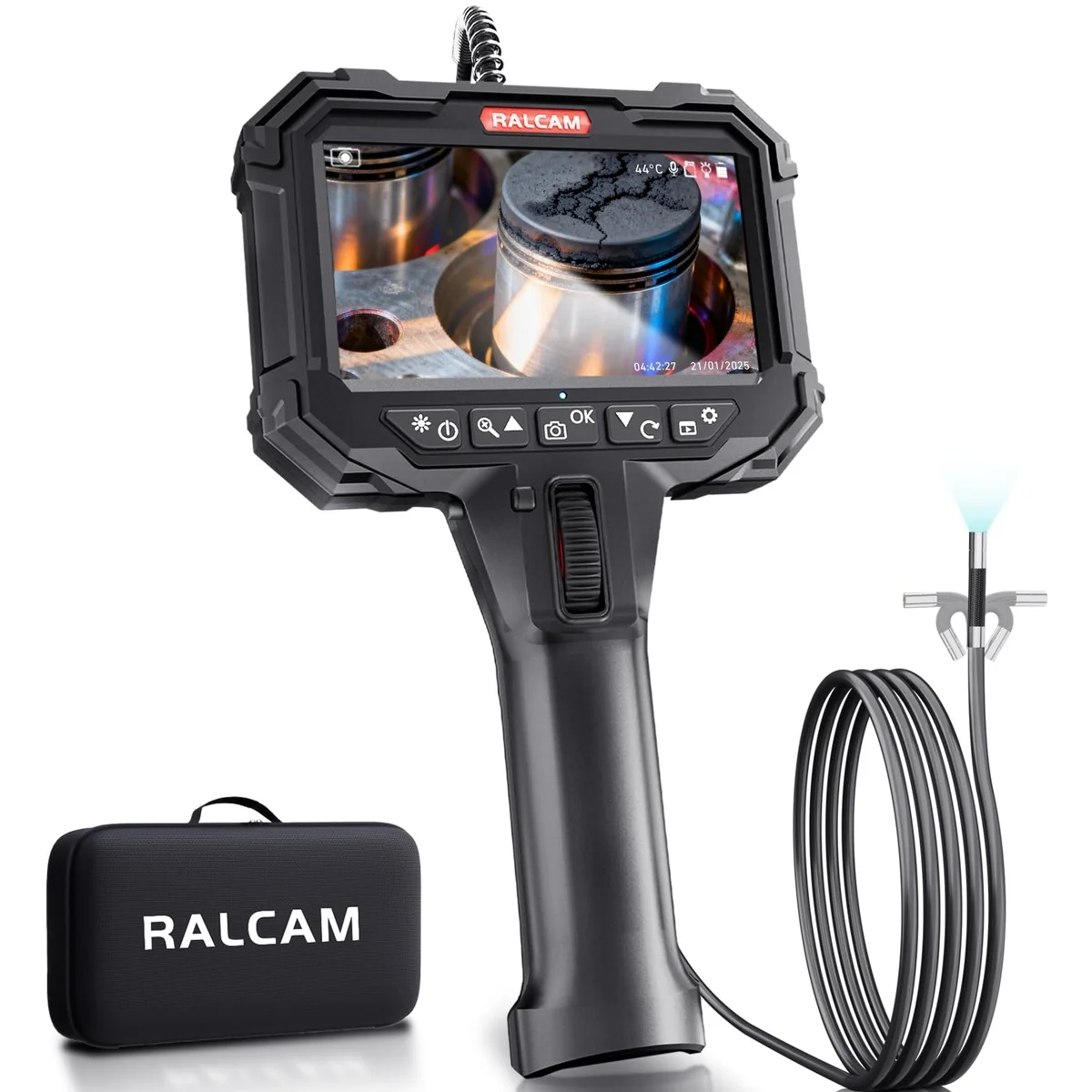
Quick answer: an engine inspection camera goes in through the spark plug hole and shows you cylinder bores, piston crowns and valve seats without removing the head. For classic car owners the spring question — did the bores survive the winter lay-up, or is that surface rust? — takes about twenty minutes per engine to answer, and the photos become your engine’s year-on-year health record.
The lay-up problem every classic owner knows
Park a classic in October, wake it in March, and the part you cannot see is the part that matters: bare cylinder walls in a damp garage attract surface corrosion, and turning a rusty bore on the starter is how honing jobs are born. Club wisdom says pull the plugs and look — but a torch down a plug hole shows a circle of piston crown and nothing of the thrust faces or valve seats where trouble actually sits. That is the specific gap a steerable engine inspection camera closes: through the same plug hole, the tip turns to sweep the bore walls, look sideways at the honing cross-hatch, and tilt up at the valve seats.
What you can see through a spark plug hole
- Bore walls: surface rust bloom vs healthy grey cross-hatch; scoring lines from a past swallow; glazing on a tired bore.
- Piston crowns: carbon pattern (even, oily, or washed clean — each tells a story), valve strike marks.
- Valve seats and heads: with a two-way tip rotated in the bore, you can inspect seat faces for pitting and recession — the check that otherwise means head removal.
- After the wake-up: re-scope a month into the season to confirm the light bloom you saw has polished away rather than deepened.
The technique works the same on motorcycles, tractors and outboards — anything with a plug or injector port. For the steering mechanics themselves (two-way vs four-way, why tip rotation matters), see the articulating borescope UK guide.
Doing the check: lay-up and wake-up routine
- Engine stone cold, ignition disabled, plugs out and labelled.
- Feed the probe with the steering relaxed; steer only once the tip is past the threads. The ARTICAM’s 5.5mm probe passes every common plug port (10mm, 12mm, 14mm) with room to articulate.
- Sweep each bore: walls at three heights, crown, then tilt to the seats. The picture runs to your phone or tablet over Bluetooth — a full-size screen you can hold where the light is, which matters if close-up eyesight is not what it was.
- Save stills per cylinder with a naming habit (car, cylinder, date). Next spring you compare like with like instead of arguing with memory.
- Before storage: same sweep, then your usual lay-up oiling routine with evidence the bores went to bed clean.
Judging what you find
Light, even rust bloom above the ring line after a damp winter is common and usually polishes out in the first miles — note it, run the engine, re-check. Deep orange staining with pitting you can see edges on, scoring you can track down the bore, or a seat face with visible recession are stop-and-think findings: compression and leak-down tests before any spirited running, and a conversation with the machine shop with your photos attached. The camera diagnoses by sight only — it does not measure. Compression figures, leak-down percentages and bore micrometry remain the quantitative tools; the camera tells you whether and where to spend that effort.
Why this beats the £25 stick scope — and a workshop visit
Rigid endoscopes see the crown and the wall directly opposite the port; they cannot look back at seats or sweep thrust faces, which is precisely where lay-up corrosion and wear live. A workshop will do a proper borescope inspection, but you are booking a slot, trailering a car that may not be a runner, and paying labour for twenty minutes of looking you can do in your own garage — every spring, for every vehicle in it. At £168.00 inc. VAT with free UK delivery, a steerable 5.5mm unit costs about one workshop inspection and stays on the shelf next to the trickle charger. The removable battery (around 6 hours a charge) covers a whole club weekend of "while you’ve got that camera out…" — and a 12-month warranty with 30-day returns covers the buying risk. If the bug bites deeper, the same unit does duty on cavity wall checks and household jobs, but the bores are what it earns its keep on.
Frequently Asked Questions
Will a 5.5mm probe fit through a spark plug hole?
Yes — common plug ports are 10mm, 12mm and 14mm across the thread, so a 5.5mm articulating tip passes with room to steer. Feed gently with the steering relaxed until the tip is clear of the threads, then articulate inside the bore.
Can I check valve seats without removing the cylinder head?
With a two-way articulating tip, yes: rotate the probe in the bore and tilt the tip upward at the seat faces. You are inspecting for pitting, recession and carbon build-up by sight — measurement still needs the head off, but sight is what tells you whether that job is necessary.
Is light rust in the bores after winter storage serious?
A light, even bloom above the ring line is common after a damp lay-up and typically polishes away in the first gentle miles — photograph it, run the engine, re-check within a month. Pitting with visible edges, tracked scoring or seat recession are the findings that justify compression and leak-down tests before hard use.
Do I need a screen or does it use my phone?
The ARTICAM streams to your smartphone or tablet over Bluetooth rather than carrying a built-in screen. In practice that is the accessibility feature: a big, bright display you can hold at reading distance and angle to the light — and stills save straight to the phone for your per-cylinder archive.
Is this a good gift for a car enthusiast?
It is the classic "would never buy it for himself" tool: under £200, genuinely used every spring and autumn, and 30-day returns cover a duplicate. If the recipient owns anything with spark plugs and a winter lay-up ritual, it will not sit in a drawer.
Key Takeaways
- Through the plug hole: bores, crowns and valve seats inspected without pulling the head.
- Steerable beats rigid — thrust faces and seats are exactly where a fixed tip cannot look.
- Photograph per cylinder, per season: the archive turns "I think it’s fine" into evidence.
- Sight screens, instruments measure: escalate to compression/leak-down on visual red flags.
See your bores before you turn the key — the ARTICAM 5.5mm articulating borescope — £168.00, free UK delivery, 30-day returns, 12-month warranty.
Ready to try ARTICAM?
Shop Now — £168.00