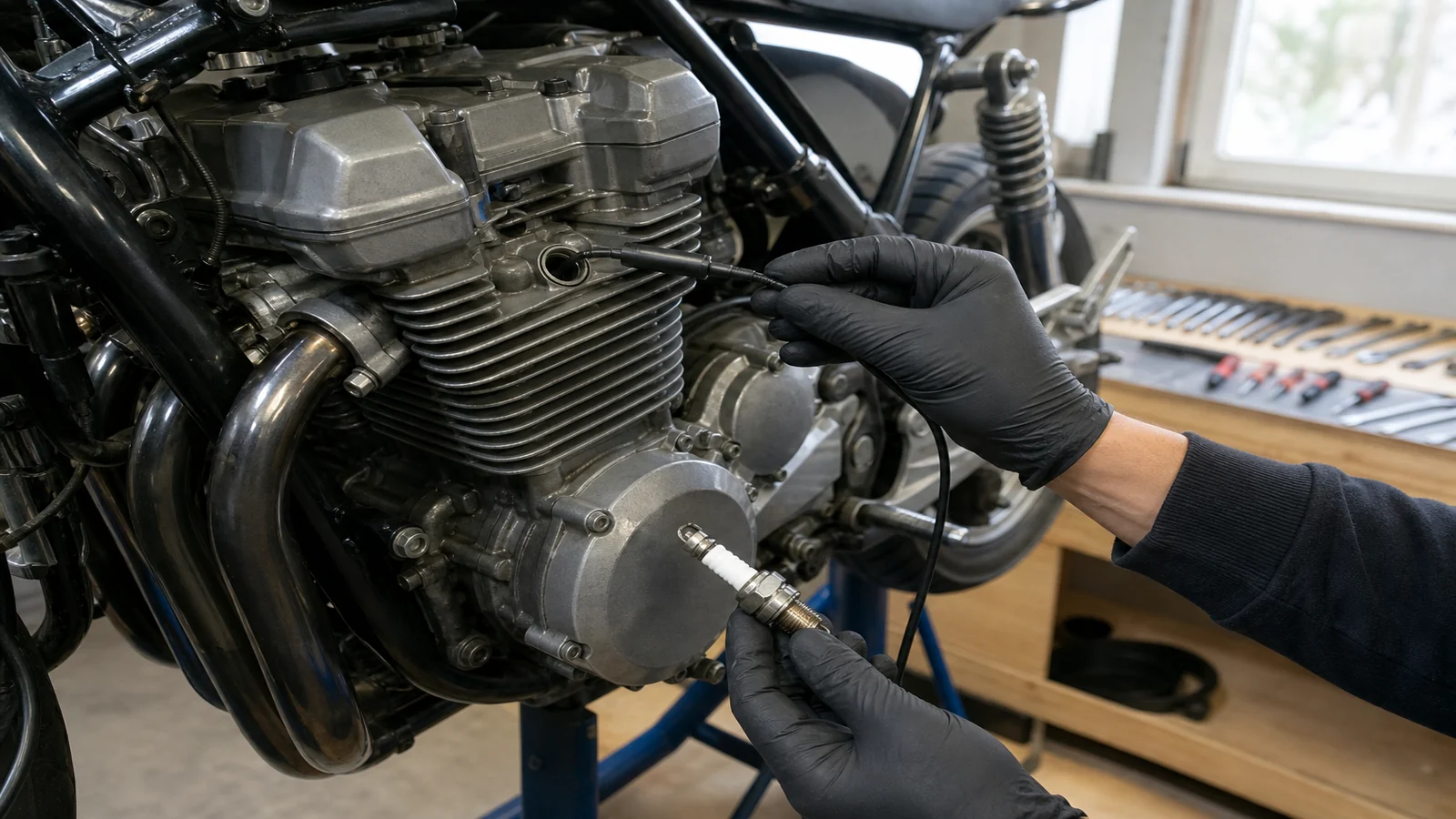
Motorcycle Engine Borescope Inspection: A Practical UK Garage Guide
A motorcycle engine borescope inspection through a spark-plug opening can show the piston crown, a strip of bore, and nearby valve faces on many engines, but it cannot measure compression, sealing or oil use. Prepare a cool, immobilised engine, protect the plug threads, record what you see, then decide whether a compression or leak-down test or a technician is the next step.
What can I see through a motorcycle spark-plug hole?
On a typical four-stroke you may see the piston crown, carbon texture, a limited band of cylinder wall, and sometimes the edge of an inlet or exhaust valve if the timing leaves them in view. You will not see the whole bore, the rings in their grooves, or the big-end. Two-strokes vary, and some heads give a poor angle even with an articulating tip.
A visual image cannot measure compression, sealing or oil consumption. A clean-looking crown can still sit above worn rings. A stained crown can still seal. Use the camera as a record, not a verdict.
How should I prepare the engine before inserting a probe?
Work only on a cool, immobilised engine and protect the plug threads. Park on a stand, remove the key, and keep the bike from rolling. Disconnect the plug cap. Blow loose grit away from the well before the plug comes out, so debris does not fall in. Follow the motorcycle maker's sequence for which cylinder and whether the piston should be near top dead centre.
Spark plugs need correct handling on the way out and back in. NGK spark plug installation guidance is to seat plugs carefully, use the right tools, and avoid damage from poor fitting; over- or under-tightening can harm the plug or the head. Do not force a probe through an opening that is smaller than the probe, and do not rotate the engine unexpectedly while the camera is inside.
What marks are worth recording?
Record, with the cylinder number and date: even light-brown colour on the crown; wet oil film; heavy dry soot; bright aluminium scrapes; a valve face that looks notched or not seating; and any object that should not be there. Take stills before you move the tip. One photograph from a random angle is hard to compare later.
For example, a used commuter brought for a pre-purchase look might show a uniform tan crown and a dull bore stripe, which is a reason to continue with a compression test rather than walk away. The same example with a bright gouge across the crown and metal flakes on the piston is a reason to stop the sale inspection and ask a motorcycle technician before the engine is turned further. Neither example is a laboratory result; both are only a prompt for the next mechanical test.
How does a borescope compare with compression or leak-down testing?
A borescope shows surfaces. A compression test shows whether the cylinder can hold pressure at cranking speed. A leak-down test shows where pressure escapes, such as past rings or valves. They answer different questions. A camera will not replace those tests, and those tests will not show a cracked piston crown that still seals for one kick.
A motorcycle MOT is a further, separate check. The GOV.UK motorcycle MOT inspection manual sets the statutory roadworthiness inspection; that defined scope does not replace internal engine diagnosis. Passing an MOT does not mean the piston is healthy, and a borescope still does not make the bike roadworthy.
When should I stop and ask a motorcycle technician?
Stop and ask a motorcycle technician if you see metal debris, a broken valve edge, a hole in the piston, coolant in a cylinder that should be dry, or if the probe binds. Stop if you cannot refit the plug to the maker's method. Do not keep turning the engine to chase a better picture.
Ask for help before a used-bike purchase if the seller will not allow a compression test after a worrying image, or if the engine is a type you cannot access without fairing work you do not want to reverse in a car park.
Who this inspection method is not for
This article is not for anyone who would inspect a hot or running engine. This article is not for using a camera view as a pass-or-fail engine rebuild decision. It is also the wrong method for diesel injector bores, for engines whose plug wells need special sockets you do not have, and for treating MOT day as an internal inspection.
When the job should stop
Stop if the engine is hot, not immobilised, or the plug well is full of grit. Stop if the probe would have to be forced. Stop if you would have to rotate the engine with the camera inside to guess a better angle. A visual image cannot measure compression, sealing or oil consumption, so the next instrument after a still set is a gauge, not a longer recording.
If you need a slim articulating camera for that cool, dry look through a plug hole, see the ARTICAM articulating inspection camera. Keep it for the inspection, then refit the plug with the care the installation guidance describes.